Clever Ways to Organize a Shared Kids Room
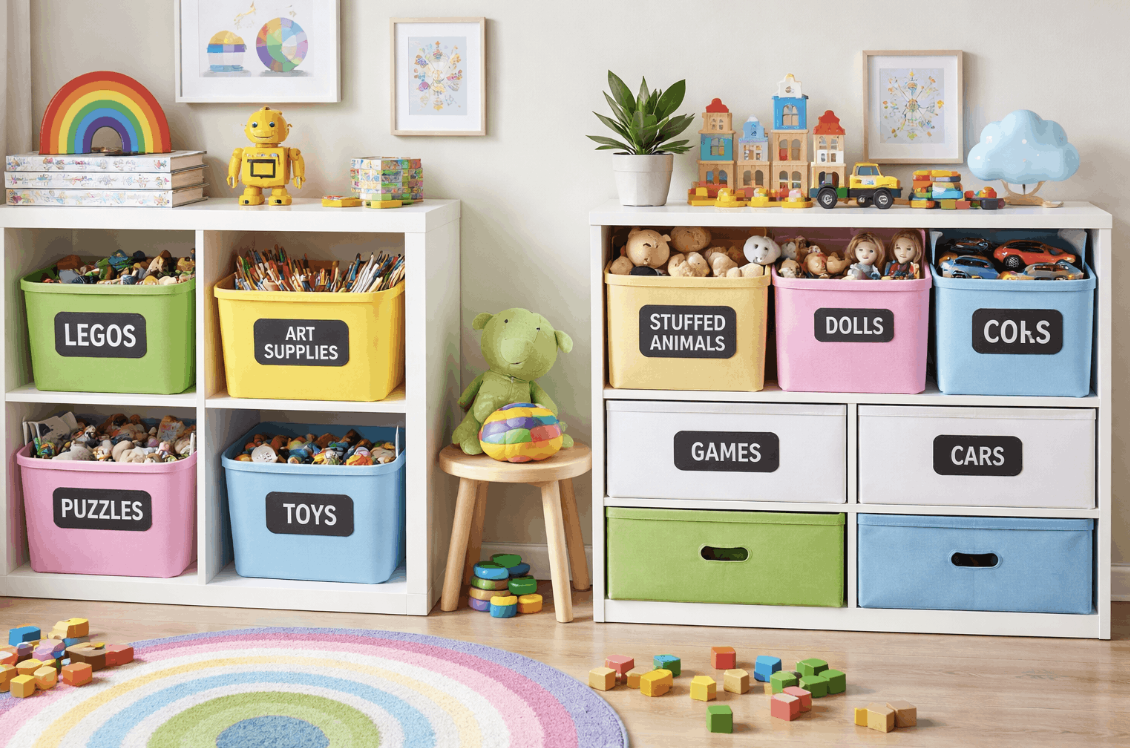
Sharing a bedroom teaches children cooperation, but it also creates daily friction over misplaced toys, mixed-up clothes, and territorial disputes. A well-organized shared room removes those pain points, giving each child a sense of ownership while keeping the space functional for everyone. This guide covers practical zoning strategies, smart storage solutions, and labeling systems that keep a shared kids room tidy without constant parental intervention.
How Can You Create Defined Zones in a Shared Kids Room?
Defined zones give each child a personal territory inside a shared space. That sense of ownership reduces arguments and makes clean-up straightforward because every item has a home base.
What Is the Best Way to Divide a Room Between Two Children?
Start by assigning each child a specific side of the room or a distinct corner. A low bookshelf, a curtain rod with a fabric panel, or a freestanding cubby unit can act as a visual divider without blocking light.
Position each child's bed, nightstand, and personal storage on their designated side. This layout creates a clear boundary that even young children can understand and respect.
How Do Color-Coded Zones Help Kids Stay Organized?
Assign each child a signature color and carry it through bedding, storage bins, drawer knobs, and wall accents. When a green bin always belongs to one child and a blue bin to the other, sorting becomes automatic.
Color-coding also speeds up the tidying process. Children can scan the room, spot items in their color, and return them to the correct zone without needing to read names or ask for help.
Keeping items sorted between siblings goes beyond color-coding the room itself. Brands like Colle à Moi offer a durable kids label that can be applied to clothing, lunchboxes, and school supplies, so each child's belongings stay clearly identified both at home and outside the house.
What Storage Solutions Work Best for Shared Kids Rooms?
Storage is the backbone of any organized shared room. The right systems prevent clutter from piling up and make it easy for children to put things away on their own.
How Do Vertical Storage Systems Maximize Floor Space?
Wall-mounted shelves, hanging organizers, and over-the-door pockets take advantage of unused vertical space. In a shared room where floor space is already limited, going upward keeps play areas open.
Install shelves at a height each child can reach independently. Stackable cubes or modular wall grids let you adjust the layout as children grow and their storage needs change.
What Types of Bins and Baskets Keep Toys Sorted by Owner?
Open-top bins are the fastest option for young children because they require no lids or latches. Place one set of bins per child in their designated zone, sized to fit the toys they use most often.
Fabric baskets with reinforced sides work well for stuffed animals and dress-up clothes. Clear plastic bins are better for small building sets and craft supplies because children can see the contents without dumping everything out.
How Does Labeling Everything Prevent Mix-Ups Between Siblings?
Labels turn a shared room into a self-sorting system. When every shelf, bin, drawer, and hook is clearly marked, children know exactly where each item belongs and who it belongs to.
Why Are Labels Essential for Shared Closets and Drawers?
Shared closets are where most mix-ups happen. Socks, underwear, and plain t-shirts look nearly identical between siblings of similar sizes. A labeled drawer or closet section eliminates the daily guessing game.
Durable, waterproof labels hold up through regular handling and can be applied to drawer fronts, shelf edges, and hanging dividers. They save time every morning and reduce the frustration of pulling on the wrong outfit.
What Items Should Be Labeled in a Shared Kids Room?
Focus on items that are easy to confuse: clothing, water bottles, school supplies, lunchboxes, and backpacks. Labeling these high-traffic items prevents the most common mix-ups both at home and at school.
Extend labeling to storage bins, bookshelves, and art supply containers inside the room. The more clearly each item and its home are identified, the less you'll hear "that's mine!" echoing down the hallway.
What Are the Best Furniture Layouts for a Shared Bedroom?
The right furniture arrangement maximizes usable space and gives each child room to sleep, study, and play without crowding the other.
How Do Bunk Beds and Loft Beds Free Up Room for Play?
Bunk beds consolidate 2 sleeping areas into the footprint of 1. The freed-up floor space can hold a reading nook, a small play table, or additional storage units.
Loft beds take this further by placing the mattress high and leaving the area underneath open for a desk, a cozy hideout, or a dresser. This setup works especially well in rooms under 120 square feet.
What Desk Arrangements Work for Two Children Studying Together?
A long shared desk against one wall gives both children a defined workspace side by side. Use a small divider or a vertical file organizer in the center to separate their supplies.
If the room is too narrow for a shared desk, 2 small corner desks on opposite sides of the room provide personal study areas. Each child faces a wall, which reduces distractions during homework time.
How Can Daily Routines Keep a Shared Room Consistently Tidy?
Organization systems only work when children use them every day. Simple, repeatable routines turn tidying into a habit rather than a battle.
What Quick Clean-Up Habits Work for Young Children?
A 5-minute tidy-up before dinner and another before bedtime keeps messes from snowballing. Set a timer and turn it into a game: challenge each child to put away as many items as possible before the buzzer.
Keep the routine predictable. Same time, same steps, same order. Children thrive on consistency, and a predictable routine removes the negotiation that slows everything down.
How Do Visual Checklists Encourage Kids to Organize on Their Own?
A laminated checklist hung at eye level on each child's side of the room acts as a step-by-step guide. Include simple tasks like "make bed," "put clothes in hamper," and "return toys to bin."
Add picture icons next to each task for pre-readers. When children can follow the checklist independently, they build confidence and take ownership of their space without constant reminders.
Practical Tips to Make Organization Fun for Kids
Let children pick their own storage bin colors or decorate labels with stickers. When they have a say in how their space looks, they're more motivated to keep it organized.
Rotate toys seasonally. Store half the collection out of sight and swap it every few months. Fewer toys in the room means less clutter, and the "new" batch feels exciting when it reappears.
Celebrate small wins. A simple sticker chart that tracks tidy-up streaks gives children a visual reward for consistent effort. After a full week, offer a small privilege like choosing the movie for family night.
Frequently Asked Questions About Organizing a Shared Kids Room
What Is the Ideal Age to Start Teaching Kids Room Organization?
Children as young as 2 can begin putting toys into a bin with guidance. By age 4, most children can follow a simple routine with visual cues. The earlier you start, the more natural the habit becomes.
How Do You Handle Conflicts Over Shared Space Between Siblings?
Set clear ground rules from the start. Each child's zone is their territory, and entering the other's zone requires permission. Hold a brief family meeting to agree on shared areas and rotate privileges like who picks the nightlight color.
What Are the Most Common Mistakes Parents Make When Organizing a Shared Room?
The biggest mistake is over-complicating the system. If children need adult help to put things away, the system is too complex. Keep storage at their height, labels easy to read, and routines under 5 minutes.
Another common error is treating both children identically. Different ages and personalities need different solutions. A 3-year-old needs picture labels and open bins, while an 8-year-old can manage drawers with written labels and a checklist.